 K-Dogam
No. 005 · Jang
What Is Gochujang? Korean Chili Paste Types and Storage
고추장 · Gochujang
At a Glance
- Type
- Gochujang (a type of jang, Korean fermented paste)
- Made from
- Grains (glutinous rice, rice, barley, wheat) or beans, gochugaru (Korean chili flakes), salt
- Taste
- Spicy, sweet and salty, with a fermented savory depth
- Texture
- Thick paste
- Heat label
- GHU levels 1–5 on some products
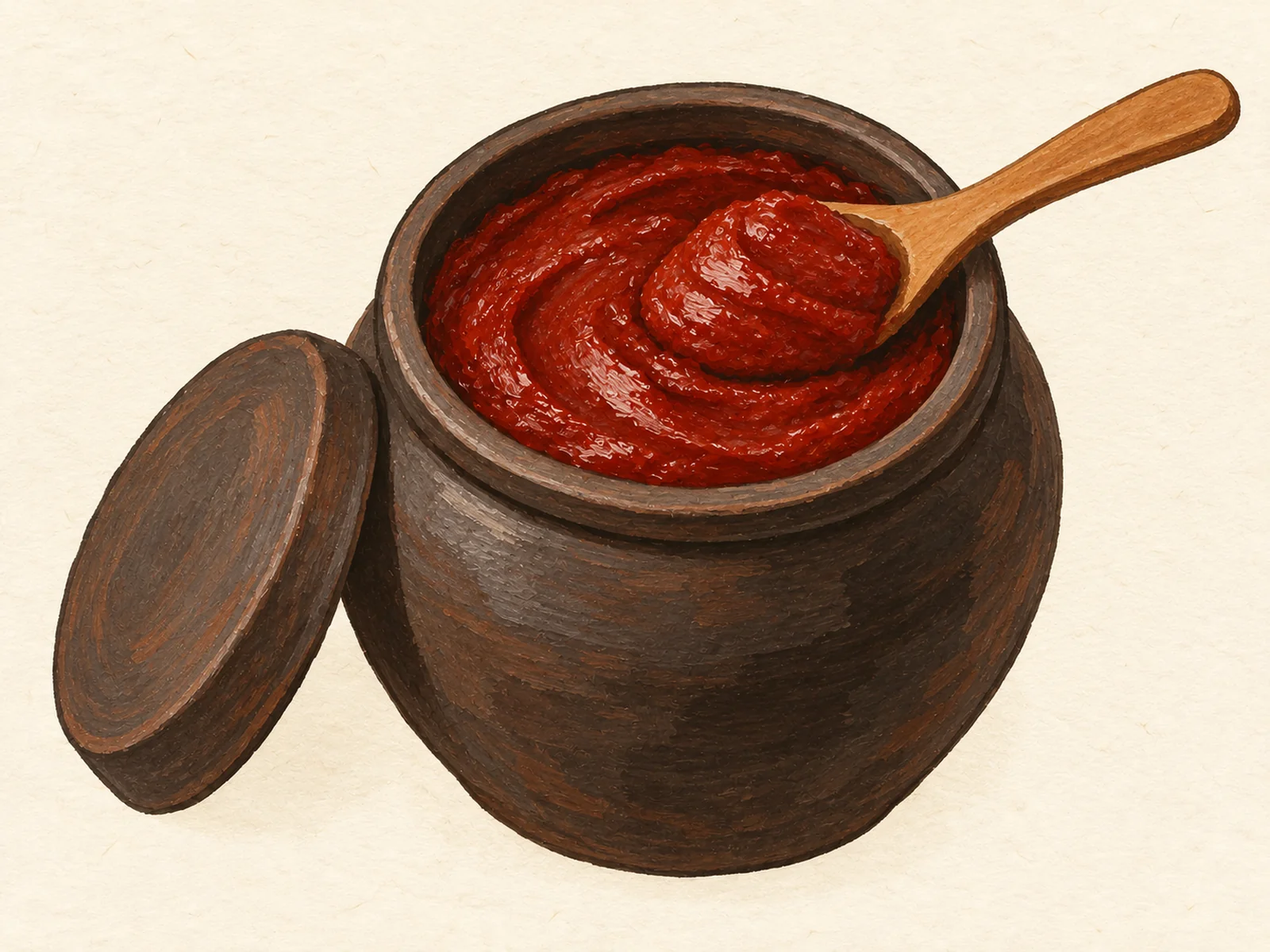
About This Ingredient
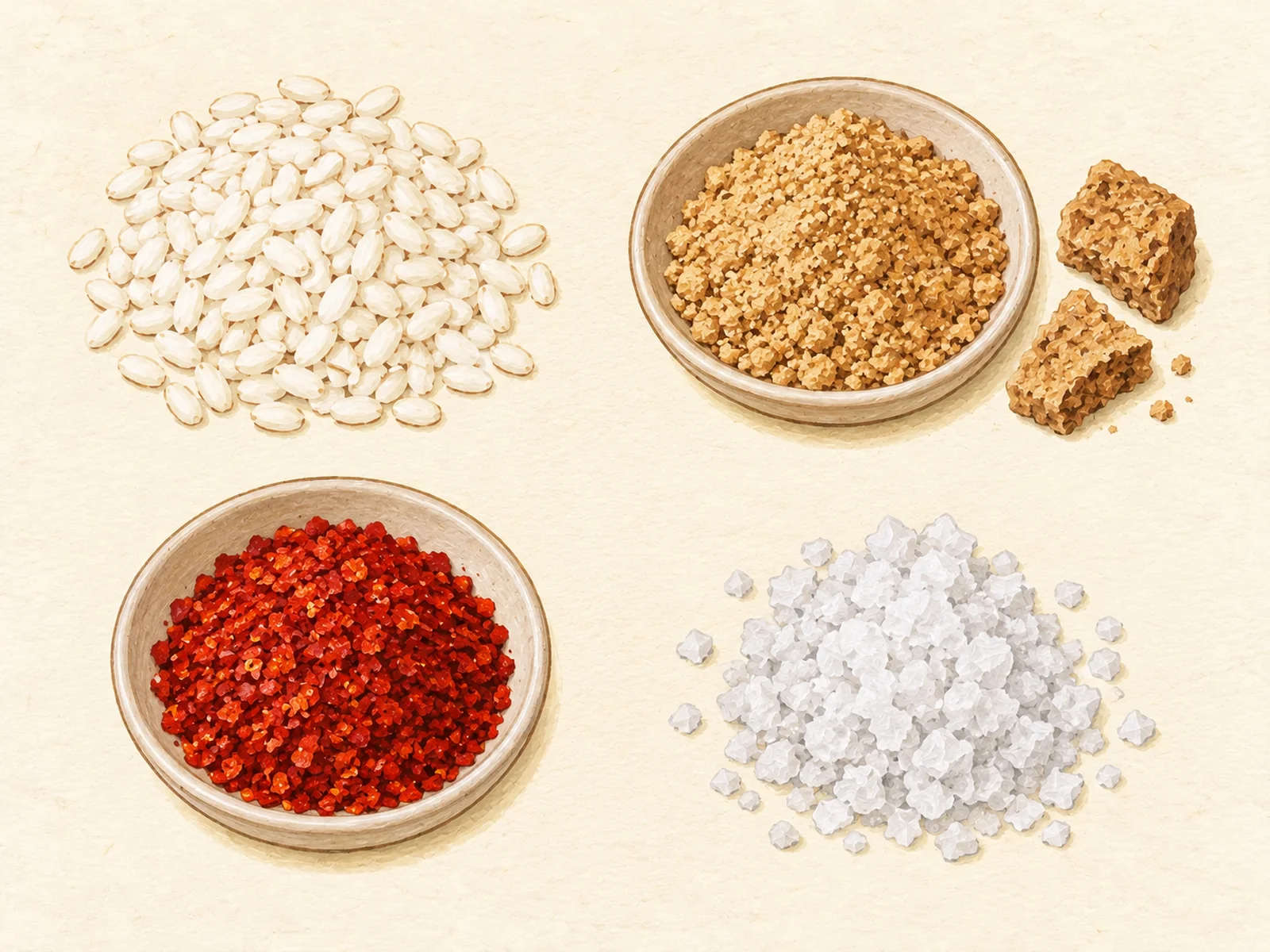
Gochujang (Korean red chili paste) is a fermented paste made from grains or beans, with gochugaru (Korean chili flakes) and salt. It tastes spicy, sweet and salty at once, and its thick texture makes it a base for stir-fry sauces, stews, bibimbap and tteokbokki (spicy rice cakes). This entry covers the main types, how to read the label, where to buy it and how to store it.
There are two broad production methods. The traditional method mixes meju (fermented soybean blocks) and grains whose starch has turned into sugar with chili flakes and salt, then ages the mixture. The other method grows selected starter cultures on grains, then mixes and ferments them; some products are heat-treated before packing. Korea’s Food Code sets the chili powder content at 6% or more, and the detailed recipe varies by product.
The sweetness comes from grain starch that turns into sugar during fermentation, and some products also add rice syrup or corn syrup. That is why two tubs with the same name can list different grains and sweeteners.
History
Chili peppers are generally thought to have reached the Korean Peninsula in the late 16th or early 17th century; the evidence usually cited is the Jibong yuseol, compiled in 1614. Some researchers argue that chili was present earlier, but others dispute whether the older words for pepper in those texts referred to chili.
Jang is much older than chili. The Samguk sagi lists jang and fermented soybeans among royal wedding gifts in 683. Before chili arrived, spicy pastes are said to have used cheoncho (Korean prickly ash), and an 18th-century text still records a version made with it.
Methods for making gochujang are recorded in 18th-century texts. The National Library of Korea copy of the Somun saseol includes a Sunchang method; it is usually dated to about 1720, but its author and date are disputed. The Jeungbo sallim gyeongje of 1766 describes a method with meju, chili powder and glutinous rice flour.
A Sunchang story tells of Yi Seong-gye tasting gochujang in a village home and asking for it as tribute after he became king. The sources reviewed do not establish the story with contemporary records. Its setting also conflicts with the mainstream account of chili's arrival.
Factory products came in the modern era. A 1970 launch of gochujang alongside soy sauce and doenjang (Korean soybean paste) by Gyeonggi Nongsan is on record, and the Korean Industrial Standard for gochujang dates from 1972. A 2010 revision introduced the five GHU heat levels.
Types
- Traditional gochujang
- Meju (fermented soybean blocks) and grains whose starch has turned into sugar are mixed with chili flakes and salt, then aged.
- Gochujang made with starter cultures
- Selected starter cultures are grown on grains, then mixed and fermented; some products are heat-treated before packing.
- Glutinous rice, rice, barley or wheat gochujang
- The name shows the starch base, not the method, so factory-style products also use these names.
- Yak-gochujang
- Gochujang stir-fried with seasoned meat: a cooked sauce made from finished gochujang, not a separate fermentation.
How to Choose
- Name
- Look for gochujang, kochujang or 고추장. English labels also use hot pepper paste, red pepper paste or Korean chili paste.
- Ingredients
- Ingredients are listed by amount. Check the grain, sweeteners such as rice syrup or corn syrup, and wheat.
- Heat level
- Korea's traditional food standard recommends a GHU heat label. If the tub shows one, check the level from 1 (mild) to 5 (very hot). Other tubs use words such as mild or very hot, and brand scales differ.
- Allergens
- Check the allergen statement for soy and wheat. A rice-based gochujang can still contain wheat.
- Nutrition
- Compare sodium and sugars per the same weight. Check them separately from any gluten-free claim.
- Storage and date
- Read the storage instructions and the date together; some products state a limit after opening.
Where to Buy
- Korean grocery stores are the usual place to buy it. Ask for gochujang.
- Asian grocery stores also stock it.
- Some large supermarkets carry it in the international aisle. Not every store does.
- Online shops sell it.
- For products labeled for room-temperature storage, the sauce shelf is a place to start. Follow the storage note on the package.
Storage
Before opening, follow the storage note on the package. Keep shelf-stable tubs in a cool, dry place away from direct sunlight.
After opening, close the lid and keep the tub in the refrigerator.
Gochujang can darken as it ages. Color alone does not show whether it has spoiled.
Mold can grow at refrigerator temperatures and in salty foods.
Substitutes
- Mild gochujang
- For products with GHU labels, choose level 1 (mild). Otherwise, check the manufacturer's mild option. It is not completely free of heat.
- Gluten-free gochujang
- Gluten-free products exist, but they can contain soy; check the allergen statement.
- Gochugaru (Korean chili flakes)
- Adds heat to a gochujang that is too mild. It cannot replace the sweetness and fermented depth of gochujang.
Similar Ingredients
- Gochugaru (Korean chili flakes)
- Dried red chili ground into flakes or powder: a raw material of gochujang, not a finished paste.
- Chogochujang (vinegared chili sauce)
- A derived form with vinegar added, observed beside raw fish and seafood as a dipping sauce.
- Ssamjang (Korean dipping paste for wraps)
- Doenjang (Korean soybean paste) and gochujang mixed with garlic and sesame oil, so its makeup differs from plain gochujang.
Used In
- No. 003 Spicy Korean Pork Stir-Fry (Jeyuk Bokkeum) Recipe
- No. 008 Beef Bibimbap (Korean Mixed Rice Bowl) Recipe
- No. 010 Tteokbokki Recipe (Spicy Korean Rice Cakes)
- No. 011 Budae Jjigae (Army Stew) Recipe with Ham and Ramyeon
- No. 012 Gamjatang Recipe (Korean Pork Bone Soup with Potatoes)
- No. 016 Dakbokkeumtang (Korean Spicy Braised Chicken) Recipe
FAQ
How spicy is gochujang?
It depends on the product. If the tub shows a GHU level, compare it from 1 (mild) to 5 (very hot). If not, check the manufacturer's description of its heat.
What can I use if I can't find gochujang?
Gochugaru adds heat but does not replace gochujang's sweetness and fermented flavor. Look for gochujang at a Korean grocery store or online.
How long does opened gochujang last?
There is no single limit for every product. Keep it in the refrigerator and follow any limit after opening on the package. Do not eat it if you see mold or an unidentified white film.
What does gochujang taste like?
Spicy, sweet and salty at once, with a savory fermented depth. The sweetness comes from grain starch that turns into sugar during fermentation, and some products also add a syrup.
Is gochujang gluten-free?
Not always. Some products contain wheat, even rice-based ones. Gluten-free gochujang exists, but it can still contain soy, so read the allergen statement.
Sources
- Maangchi — Hot pepper paste (Gochujang)
- My Korean Kitchen — Essential Korean Cooking Ingredients
- The Kitchn — What Is Gochujang?
- Sempio — Gochujang ingredients and allergens
- Sempio — Gluten-free gochujang
- CJ — Storage and color change of jang (in Korean)
- Korea.kr — Use-by date Q&A (in Korean)
- USDA FSIS — Molds on Food
- Encyclopedia of Korean Culture — Chili pepper (in Korean)
- Encyclopedia of Korean Culture — Jibong yuseol (in Korean)
- Encyclopedia of Korean Culture — Somun saseol (in Korean)
- Encyclopedia of Korean Culture — Jang (in Korean)
- Encyclopedia of Korean Culture — Jeungbo sallim gyeongje (in Korean)
- Encyclopedia of Korean Culture — Gyeonggi Nongsan (in Korean)
- National Folk Museum of Korea — Somun saseol (in Korean)
- Joo Kyeong-chul — Routes of the chili pepper (2023, in Korean)
- Sunchang County — Manilsa stele (in Korean)
- KSA — KS H 2120 Gochujang (in Korean)
- Ministry of Agriculture — Gochujang heat levels, 2010 (in Korean)
- Korea Food Code — Jang (in Korean)
- NAQS — Traditional food standard for gochujang (in Korean)
- aT — 2021 processed food market report: gochujang (in Korean)
- Encyclopedia of Korean Culture — Gochujang (in Korean)
Compiled and reviewed by Nuri · Published · Updated