 K-Dogam
No. 011 · Jjigae
Budae Jjigae Recipe with Ham and Ramyeon (Army Stew)
부대찌개 · Budae-jjigae
Servings & Time
2 servings · Prep 15min · Cook 15min
About This Dish
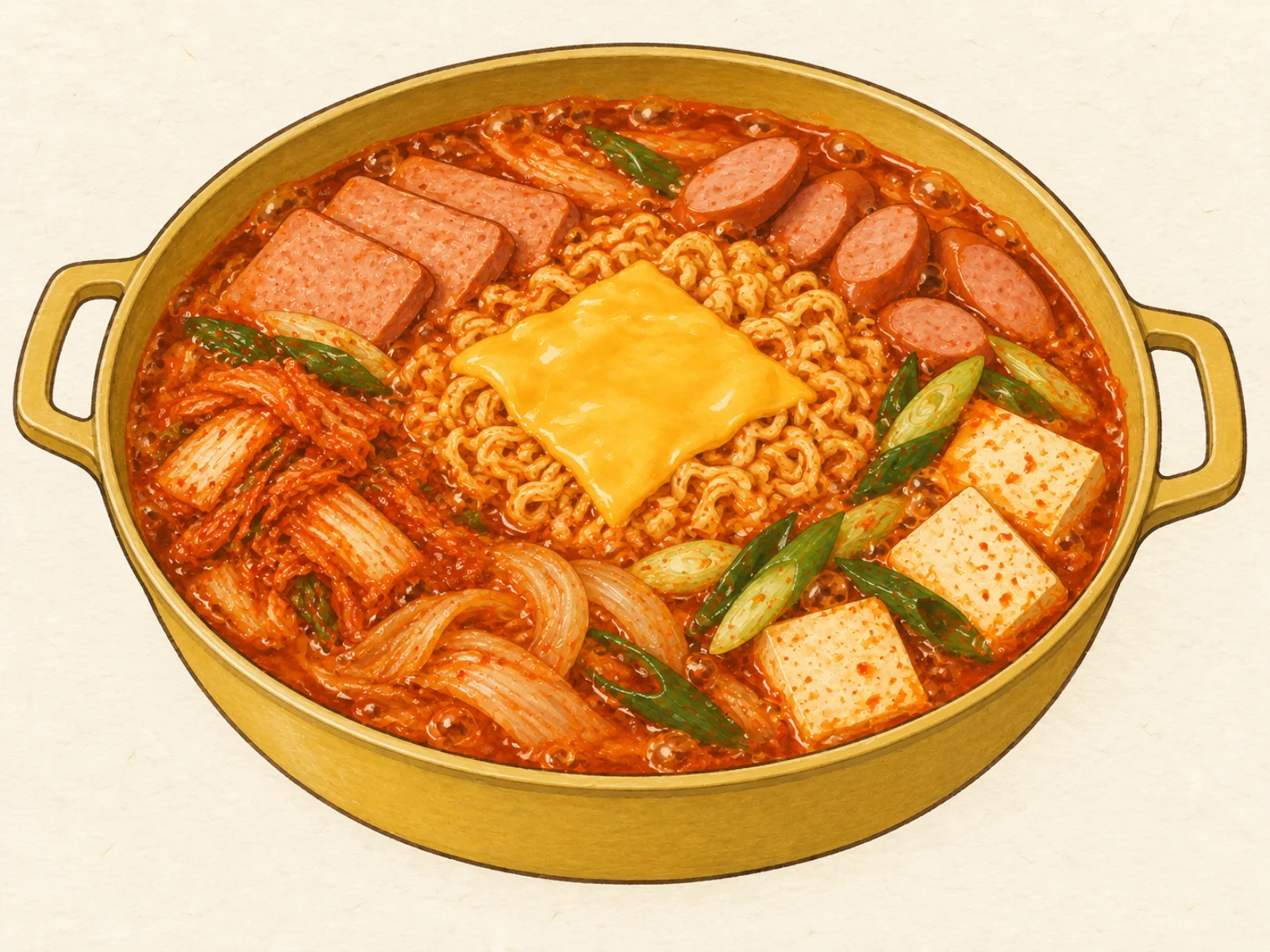
This budae jjigae serves two in about 30 minutes. Canned ham, sausages, kimchi and tofu boil in a spicy broth with gochugaru (Korean chili flakes) and a little gochujang (Korean chili paste), and ramyeon (Korean instant noodles) goes in near the end. The key is to add the noodles last and keep enough broth in the pot.
The name means “military unit stew.” According to the National Folk Museum of Korea and a Gyeonggi Province report, it took shape after the Korean War in areas near US military bases, where ham and sausages were boiled with kimchi and Korean seasonings. The two sources reviewed here do not establish an exact first year or a single creator.
Recipes differ in what they add: baked beans, bacon, ground meat, cheese or rice cakes. This entry keeps a simple set and lists cheese as optional.
Ingredients
Scroll sideways to see all columns →
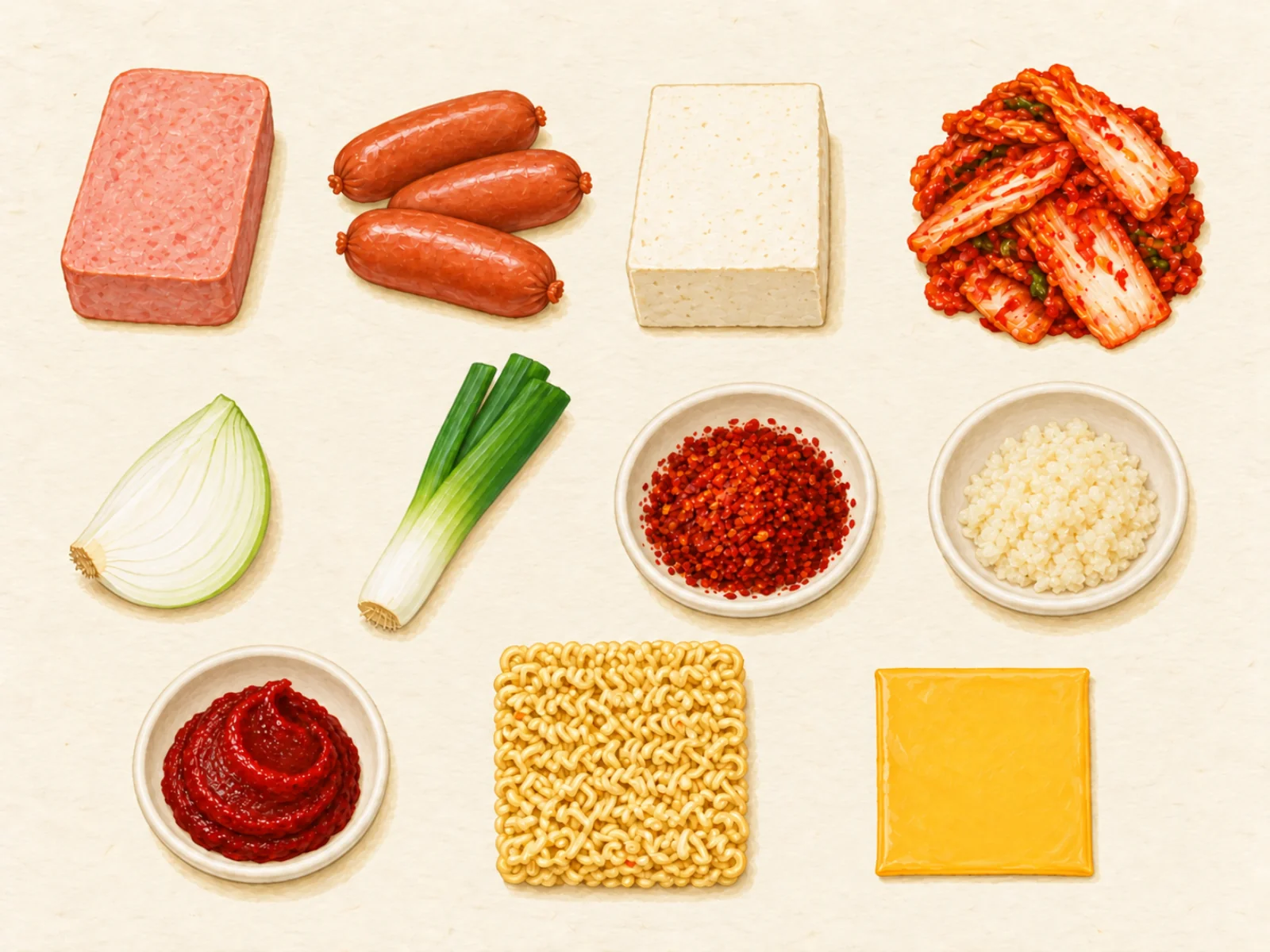
| # | Ingredients | Qty | Remarks |
|---|---|---|---|
| 01 | Canned ham (luncheon meat) | About 100 g (3.5 oz) | Cut into slices about 1 cm (3/8 in) thick |
| 02 | Sausages (frankfurters) | About 100 g (3.5 oz) | Cut diagonally |
| 03 | Firm tofu | About 100 g (3.5 oz) | Cut into slices about 1 cm (3/8 in) thick |
| 04 | Kimchi | About 100 g (3.5 oz) | Cabbage kimchi, cut into bite-size pieces |
| 05 | Onion | 1/4 ea (about 50 g / 1.8 oz) | Sliced |
| 06 | Green onion | About 1/2 stalk | Cut diagonally |
| 07 | Gochugaru (Korean chili flakes) | About 1 1/2 tbsp | |
| 08 | Minced garlic | 1 tbsp | |
| 09 | Gochujang (Korean chili paste) | About 1/2 tbsp | |
| 10 | Soy sauce | About 1/2 tbsp | Regular cooking soy sauce, not soup soy sauce |
| 11 | Water or broth | About 600 ml (2 1/2 cups) | Anchovy or chicken broth, or plain water |
| 12 | Ramyeon noodles (Korean instant noodles) | 1 block | Noodles only, without the seasoning packet |
| 13 | Sliced cheese | 1 slice (optional) |
Equipment
- Wide, shallow pot, 24–26 cm (about 9 1/2–10 1/4 in)
- Small bowl (for the sauce)
Instructions
Cut the ham, sausages, tofu, kimchi, onion and green onion as noted in the ingredients.
Canned ham (luncheon meat) About 100 g (3.5 oz) · Sausages (frankfurters) About 100 g (3.5 oz) · Firm tofu About 100 g (3.5 oz) · Kimchi About 100 g (3.5 oz) · Onion 1/4 ea (about 50 g / 1.8 oz) · Green onion About 1/2 stalk
In a small bowl, mix the gochugaru, garlic, gochujang and soy sauce.
Gochugaru (Korean chili flakes) About 1 1/2 tbsp · Minced garlic 1 tbsp · Gochujang (Korean chili paste) About 1/2 tbsp · Soy sauce About 1/2 tbsp
Put the kimchi and onion in the pot. Arrange the ham, sausages and tofu around them. Put the sauce in the center.
Add the water or broth. Cover the pot. Bring it to a boil over medium-high heat, about 7 minutes.
Water or broth About 600 ml (2 1/2 cups)
Stir in the sauce. Add the noodles. Boil for about 3 minutes, until the noodles are almost soft.
Ramyeon noodles (Korean instant noodles) 1 block
Add the green onion and the cheese, if used. Boil for about 1 minute, until the noodles are soft. Check that the ham, sausages and tofu are hot throughout.
Sliced cheese 1 slice (optional)
Turn off the heat. Serve hot with rice.
Doneness Check
- The broth boils throughout, and the ham, sausages and tofu are hot to the center
- The noodles are soft, with no hard core
- The stew still has enough broth to cover the bottom of the pot
Variations
- Uijeongbu style
- Sources describe a leaning toward kimchi in Uijeongbu, and the restaurant profiled there makes its broth with anchovies.
- Songtan style
- Some Songtan versions add chili beans.
- Dongducheon style
- This style tends to mix many kinds of processed meat.
Similar Dishes
- Kimchi jjigae (kimchi stew)
- Some kimchi jjigae specimens contain Spam, so ham alone cannot distinguish them from this budae jjigae with ham, sausages and ramyeon noodles.
FAQ
Can I leave out some of the ingredients?
Yes. Cheese and noodles are optional in several recipes, and you can use only one kind of processed meat. Kimchi gives the broth its sour, spicy base, so keep it if you can.
What broth should I use?
Anchovy broth, chicken broth or plain water all work. Packaged broths differ in salt, so taste before you add more soy sauce.
How do I store leftover budae jjigae?
Refrigerate leftovers in shallow containers within 2 hours after cooking (1 hour if the room is 32°C (90°F) or hotter), keep them at 4°C (40°F) or below, and use them within 3–4 days. Bring the stew to a full boil when you reheat it. The noodles keep absorbing broth, so add a little water.
Why is it called army base stew?
Budae means a military unit. The dish took shape after the Korean War in areas of Gyeonggi Province near US military bases, where ham and sausages were boiled with kimchi and Korean seasonings.
Sources
- My Korean Kitchen — Budae jjigae
- Korean Bapsang — Budae jjigae
- Beyond Kimchee — Korean army stew
- Kimchimari — Budae jjigae
- Doobydobap — Budaejjigae
- Vegemil — Budae jjigae (Korean)
- Wtable — Budae jjigae (Korean)
- National Folk Museum of Korea — Budae jjigae (Korean)
- Gyeonggi Province newsletter — Uijeongbu budae jjigae (Korean)
- USDA — Sausages and food safety
- USDA — Shelf-stable food safety
- Nongshim USA — Shin Ramyun allergen information
- Sempio — Gochujang ingredients
- USDA — Leftovers and food safety
- FoodSafety.gov — Cold food storage chart
Compiled and reviewed by Nuri · Published