 K-Dogam
No. 006 · Jang
What Is Doenjang? Korean Soybean Paste Types and Storage
된장 · Doenjang
At a Glance
- Type
- Hansik doenjang or doenjang (Korean food types within jang, fermented pastes and sauces)
- Made from
- Soybeans (as meju, fermented soybean blocks) and salt; some products add rice, barley or wheat
- Taste
- Salty and savory, with a strong fermented aroma
- Texture
- Thick paste
- Sister product
- Traditional methods that separate the liquid also yield guk-ganjang (Korean soup soy sauce) from the same meju
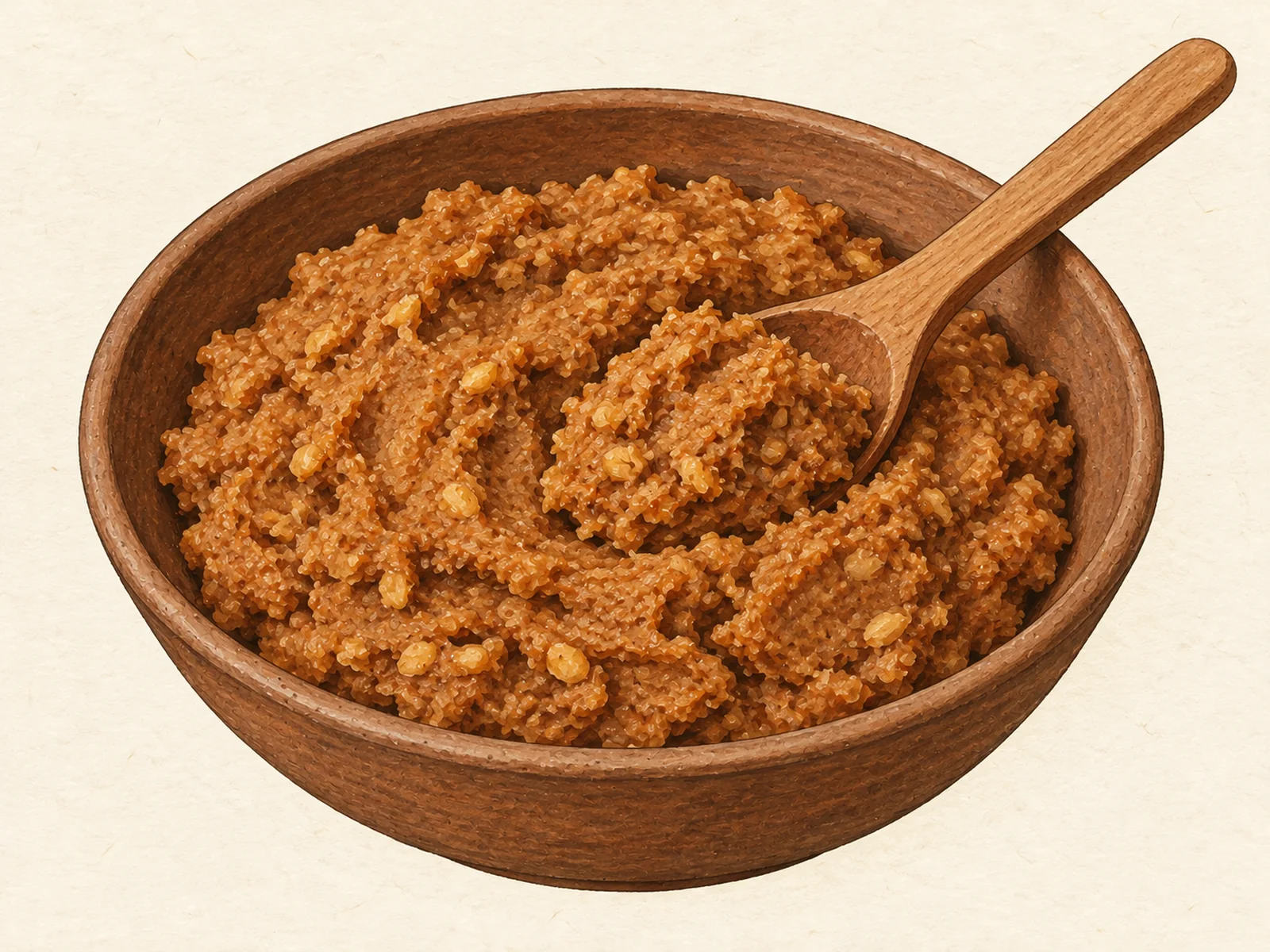
About This Ingredient
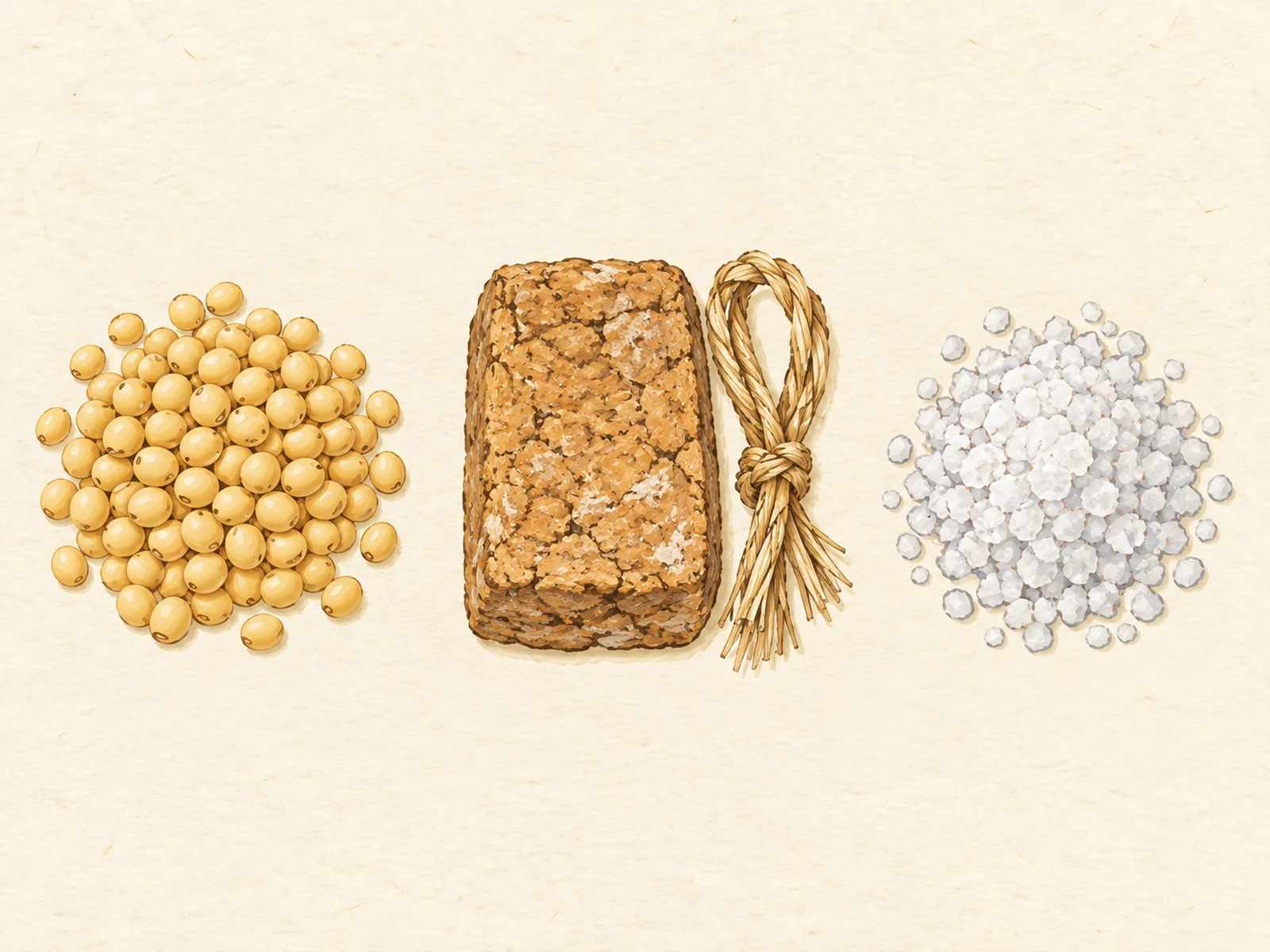
Doenjang (Korean soybean paste) is a fermented paste aged with salt, made from soybeans turned into meju (fermented soybean blocks) or from soybeans or grains fermented with starter cultures (microbes used to start fermentation). It is salty and savory with a strong fermented aroma, and it seasons doenjang jjigae (Korean soybean paste stew), doenjang soups, seasoned vegetables and ssamjang (Korean dipping paste for wraps). This entry covers the types, how to read the label, where to buy it and how to store it.
In traditional methods that separate the liquid, meju is soaked and aged in salt water; the liquid is drawn off as guk-ganjang (Korean soup soy sauce), and the remaining solids are aged into doenjang. The other method ferments the ingredients with selected starter cultures, mixes in salt and ages the paste; some products add grain or are heat-treated before packing.
Korea’s Food Code separates hansik doenjang, made from traditional meju with the liquid separated, from doenjang, a type that covers both fermentation with starter cultures and the meju method. A label reading doenjang therefore does not mean no meju was used, and the food type and ingredient list say more than words such as traditional on the front.
History
Jang has a long record. The Samguk sagi, compiled in 1145, lists jang and si (fermented soybeans) among gifts for the wedding of the Silla king Sinmun in 683. That record alone does not show whether this jang was the same food as today's doenjang.
Studies propose different places where soybeans were first grown as crops. A 2010 genetic study proposes a single domestication in southern China, while a 2011 archaeological study suggests several regions across China, Korea and Japan. The origin of soybean pastes is also debated: some scholars look to Manchuria and the Goguryeo region, others examine early Chinese records.
Joseon-era texts record making jang from meju and drawing off the liquid as a separate sauce. The Sanga yorok (about 1450) and the first volume of the Suun japbang, written by Kim Yu around 1540, include such methods, and the Jeungbo sallim gyeongje of 1766 also describes making jang.
Factory products came in the modern era. Gyeonggi Nongsan launched Songhak-brand doenjang in 1970; the Korean Industrial Standard for doenjang dates from 1972, and the traditional food standard from 1993. Today's traditional food standard covers methods both with and without drawing off the soy sauce.
Types
- Hansik doenjang
- A Korean food type made by fermenting traditional meju in salt water and separating the liquid.
- Doenjang (food type)
- Made by fermenting soybeans or grains with starter cultures and aging them with salt, or by fermenting meju in salt water and separating the liquid; the meju method is included too.
- Makjang
- A paste made from meju powder and other ingredients without drawing off soy sauce; grains and seasonings vary by region.
- Soybean, rice and barley doenjang
- Names based on the main ingredient or grain used; adding grain does not make a doenjang non-traditional.
How to Choose
- Name
- Look for doenjang, 된장, soybean paste or Korean soybean paste. Check for the Korean name 된장, because cheonggukjang (quick-fermented soybean paste) is also sold as fermented soybean paste.
- Food type
- Korean labels state the food type: 한식된장 (hansik doenjang), 된장 (doenjang) or 혼합장 (mixed paste). The type describes the method, not quality.
- Seasoned products
- Yangnyeom doenjang (seasoned doenjang) adds seasonings such as garlic, onion or sugar. Plain doenjang lists soybeans and salt near the top.
- Ingredients and allergens
- Doenjang contains soy. Some products contain wheat, and some contain anchovy extract, so it is not always vegetarian.
- Nutrition
- Sodium and serving sizes vary by product. Compare sodium per the same weight.
- Storage and date
- Read the storage instructions and the date together; some products state a limit after opening.
Where to Buy
- Korean grocery stores sell it. Ask for doenjang.
- Asian grocery stores and online shops also sell it.
- For products labeled for room-temperature storage, the sauce and paste shelf is a place to start. Follow the storage note on the package.
Storage
Before opening, follow the storage note on the package. Keep shelf-stable tubs in a cool place away from direct sunlight.
After opening, close the lid and keep the tub in the refrigerator.
Doenjang can darken as it ages. Color alone does not show whether it has spoiled.
White crystals of amino acids can form in doenjang. Not every white spot is a crystal, so do not assume an unknown white change is one.
Mold can grow at refrigerator temperatures and in salty foods.
Substitutes
- Another doenjang product
- Saltiness varies by product, so there is no fixed ratio. Start with less and add to taste.
- Yangnyeom doenjang (seasoned doenjang)
- Added seasonings change the flavor, so it does not swap one for one.
- Ssamjang (Korean dipping paste for wraps)
- It contains gochujang (Korean red chili paste) and other seasonings, so the flavor changes; it is not a full substitute.
Similar Ingredients
- Gochujang (Korean red chili paste)
- A red paste with chili, spicy and slightly sweet, so its taste and color differ from doenjang.
- Cheonggukjang (quick-fermented soybean paste)
- Soybeans fermented for a short time with a stronger aroma; Korea's Food Code classifies it as a separate species (food type).
- Ssamjang (Korean dipping paste for wraps)
- Doenjang and gochujang mixed with other seasonings for dipping, so its makeup differs from plain doenjang.
Used In
FAQ
Is the strong smell of doenjang normal?
A fermented aroma is part of doenjang. Smell alone cannot tell you whether it has spoiled, so do not eat it if you see mold or an unidentified white film.
What can I use if I can't find doenjang?
The sources reviewed do not identify a substitute with the same flavor. If you switch to another doenjang, start with less because saltiness varies. Ssamjang contains other seasonings, so the flavor will change.
How long does opened doenjang last?
There is no single limit for every product. Close the lid, keep it in the refrigerator and follow any limit after opening on the package.
What does doenjang taste like?
Salty and savory, with a strong fermented aroma. Flavor and texture vary by product and method.
Is doenjang vegetarian or gluten-free?
Not always: some products contain wheat or anchovy extract. For a gluten-free product, check the gluten-free label; an ingredient list without wheat alone does not confirm it. Doenjang still contains soy, so read the ingredient list and allergen statement.
Sources
- Kimchimari — Soybean Paste
- My Korean Kitchen — Essential Korean Cooking Ingredients
- Maangchi — Cheonggukjang-jjigae
- Sempio — Doenjang ingredients and allergens
- USDA FSIS — Molds on Food
- Guo et al. — Soybean domestication genetics (2010, abstract)
- Lee et al. — Archaeological soybeans in East Asia (2011)
- Carmy — Doenjang jjigae (anchovy extract in doenjang)
- Sempio — Doenjang product 629 ingredients and nutrition
- Seoul Shinmun — Cheonggukjang and doenjang fermentation (2007, in Korean)
- Korea Food Code — Jang (in Korean)
- MFDS — Food labeling standards (in Korean)
- aT — 2021 processed food market report: doenjang (in Korean)
- Encyclopedia of Korean Culture — Doenjang (in Korean)
- Encyclopedia of Korean Culture — Jang (in Korean)
- Encyclopedia of Korean Culture — Suun japbang (in Korean)
- Encyclopedia of Korean Culture — Jeungbo sallim gyeongje (in Korean)
- Encyclopedia of Korean Culture — Gyeonggi Nongsan (in Korean)
- National Institute of Korean History — Samguk sagi (in Korean)
- Han and Kim — Jang in early Joseon cookbooks (2020, in Korean)
- Choi Deok-gyeong — Origins of soybeans, jang and si (2009, in Korean)
- KSA — KS H 2119 Doenjang (in Korean)
- NAQS — Traditional food standard for doenjang (in Korean)
- CJ — Storage and color change of jang (in Korean)
- Sempio — Jang product FAQ (in Korean)
- Korea.kr — Use-by date Q&A (in Korean)
Compiled and reviewed by Nuri · Published