 K-Dogam
No. 024 · Jang
What Is Ssamjang? Korean Dipping Paste for Wraps
쌈장 · Ssamjang
At a Glance
- Type
- Seasoned jang (Korean fermented paste); the related Korea Food Code type is mixed jang (honhapjang), so check the package
- Made from
- Doenjang (Korean soybean paste) and gochujang (Korean chili paste), with garlic, sesame oil and other seasonings
- Taste
- Salty and savory, nutty, with mild heat
- Texture
- Thick paste
- Main use
- Lettuce wraps, grilled meat and raw vegetables for dipping
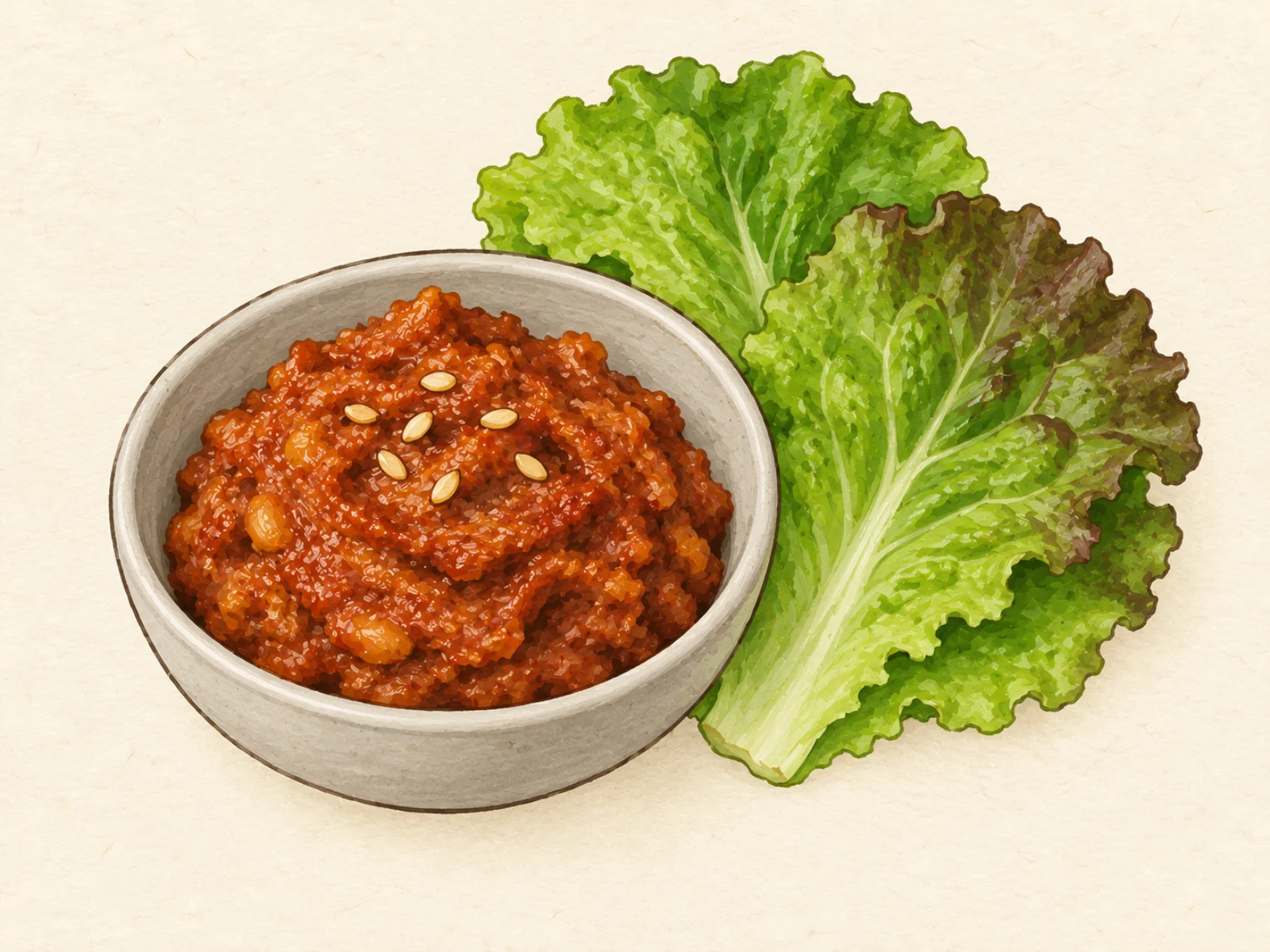
About This Ingredient
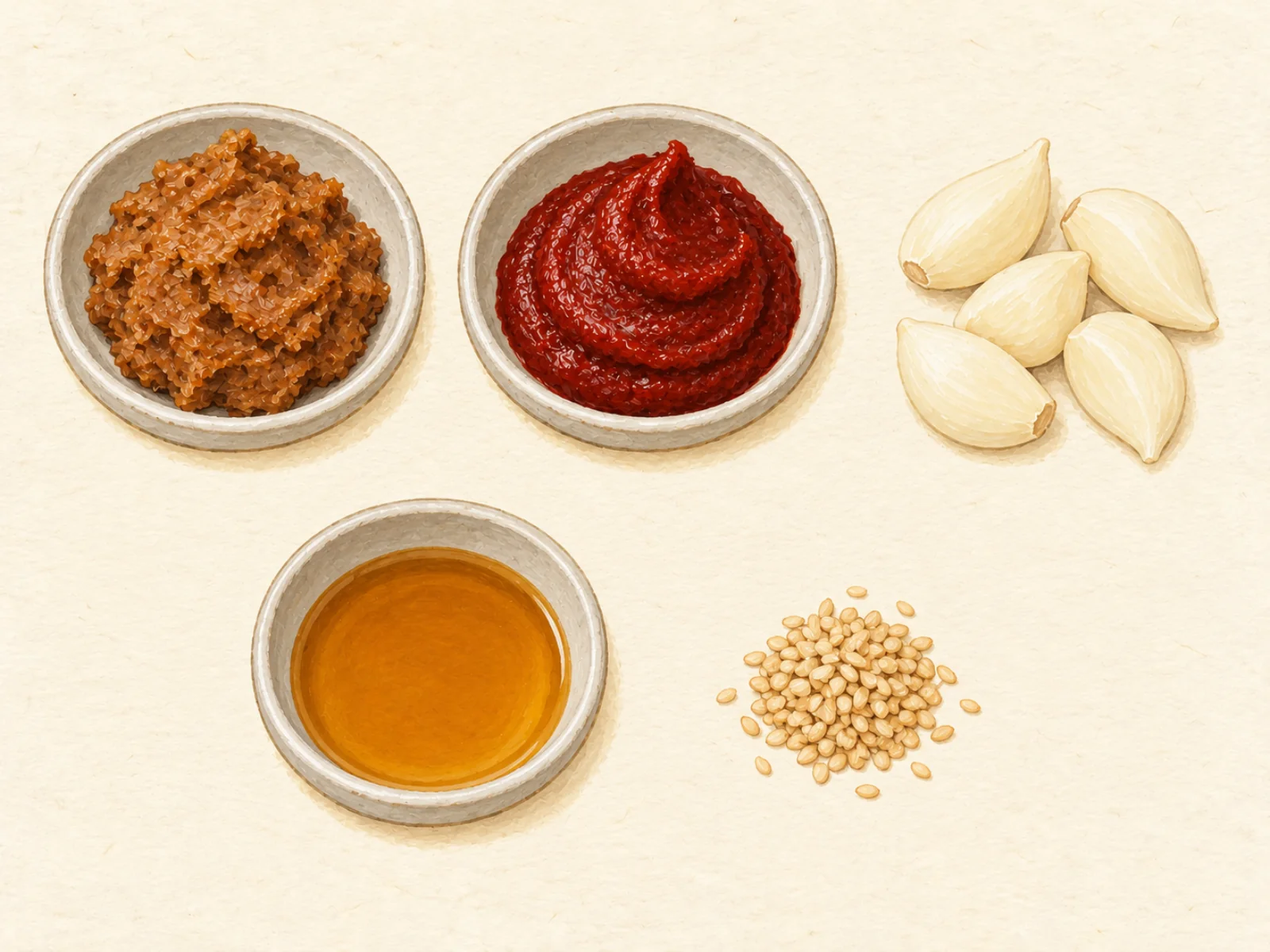
Ssamjang (Korean dipping paste for wraps) is a thick paste based on doenjang (Korean soybean paste) and gochujang (Korean chili paste), mixed with garlic, sesame oil, sesame seeds and other seasonings. It is salty, savory and nutty with mild heat, and it is served with lettuce wraps, grilled meat and raw vegetables. This entry covers its types, how to read the label, where to buy it and how to store it.
Store-bought ssamjang starts from fermented pastes such as doenjang and gochujang, which are blended with other ingredients. In the Korea Food Code, such a mixed jang must contain at least 50% jang, and the rest of the recipe varies by product.
Ssamjang can also be mixed at home from these pastes. This entry covers the ready-made paste and does not give a mixing ratio.
History
The Sasojeol by Yi Deok-mu, with a preface dated 1775, describes eating ssam (leaf wraps) dipped in jang (Korean fermented paste).
The Dongguk sesigi by Hong Seok-mo, with a preface dated 1849, records bokssam, rice wrapped in leaves of greens, eaten at the first full moon of the lunar year.
As one example of modern packaged ssamjang, CJ CheilJedang states that its Samwon ssamjang was launched in 1983. The sources reviewed do not show when the name ssamjang itself first came into use.
Types
- Standard ssamjang
- Doenjang and gochujang mixed with seasonings such as garlic and sesame oil.
- Ssamjang for grilled meat
- Named for its use with meat. The name describes a use, not a separate legal food type.
- Spicy ssamjang
- Some products add hot green chili. Heat varies by product.
- Low-sugar ssamjang
- Some products replace part of the sugar with other sweeteners. Low sugar does not mean low sodium.
How to Choose
- Food type
- Look for the food type on the label, such as mixed jang (혼합장). In the Korea Food Code, a mixed jang must contain at least 50% jang.
- Which jang
- Check which pastes are used and how much of each. The amounts do not rank flavor or quality.
- Full ingredient list
- Read the ingredients inside brackets too. Check for soy and wheat in the pastes, as well as sesame oil, perilla and sweeteners.
- Nutrition
- Compare sodium and sugars per the same weight.
- Date and storage
- Read the date and the storage instructions together. A date for the unopened tub is not a limit after opening.
Where to Buy
- Korean grocery stores sell ready-made ssamjang in tubs. Ask for ssamjang.
- Some Asian grocery stores also carry it.
- Online shops sell it.
- Look for ssamjang (쌈장). Manufacturer listings also use names such as seasoned soybean paste and ssamjang paste.
- The words soybean paste alone do not identify ssamjang; check the full product name and ingredients.
Storage
Before opening, follow the storage instructions on the package. The product checked for this entry is stored in a cool, dry place before opening.
After opening, close the lid and keep the tub in the refrigerator.
Do not use the printed date for the unopened tub as a limit after opening. Follow any limit after opening on the package.
Mold can grow at refrigerator temperatures and in salty foods.
Substitutes
- Doenjang and gochujang
- Doenjang and gochujang can form a base, but other seasonings also affect the flavor; the two pastes alone do not reproduce ssamjang.
Similar Ingredients
- Doenjang (Korean soybean paste)
- Plain doenjang is the fermented soybean base, while ssamjang combines it with gochujang and seasonings.
- Gochujang (Korean chili paste)
- Gochujang is a fermented chili paste on its own; ssamjang mixes it with doenjang and seasonings.
FAQ
What does ssamjang taste like?
It is salty and savory with a nutty flavor from sesame. Heat varies by product, from mild to spicier versions.
What do you eat ssamjang with?
It is served with lettuce wraps and grilled meat, and as a dip for raw vegetables.
Do I need to refrigerate ssamjang after opening?
Yes. Close the lid and keep it in the refrigerator. Discard it if you see mold or an unidentified white film.
What can I use instead of ssamjang?
One recipe mixes doenjang and gochujang with garlic, sesame oil and other seasonings. Two pastes alone will not taste the same as a store-bought ssamjang.
Can I use ssamjang in a marinade?
It is mainly served as a dipping paste. If you add it to a marinade, taste before you add salt, because ssamjang is already salty.
Sources
- My Korean Kitchen — Ssamjang sauce
- My Korean Kitchen — Ssamjang
- Sempio — Ssamjang, seasoned soybean paste
- Sempio — Ssamjang dipping paste
- Sempio — Gluten-free ssamjang
- O'food Europe — Ssamjang paste
- Korea Food Code — Jang (in Korean)
- National Folk Museum of Korea — Ssamjang (in Korean)
- Chung Jung One — Ssamjang for grilled meat (in Korean)
- Sempio — Low-sugar jang (in Korean)
- Sempio — Spicy ssamtojang (in Korean)
- Jeong et al. 2023 — Perilla seed allergy
- Korea.kr — Use-by date Q&A (in Korean)
- USDA FSIS — Molds on Food
- National Folk Museum of Korea — Ssam (in Korean)
- Jangseogak — Sasojeol (in Korean)
- Encyclopedia of Korean Culture — Ssam (in Korean)
- Encyclopedia of Korean Culture — Dongguk sesigi (in Korean)
- CJ CheilJedang — Samwon ssamjang (in Korean)
Compiled and reviewed by Nuri · Published