 K-Dogam
No. 003 · Bokkeum
Spicy Korean Pork Stir-Fry Recipe (Jeyuk Bokkeum)
제육볶음 · Jeyuk-bokkeum
Servings & Time
2 servings · Prep 10min · Cook 20min
About This Dish
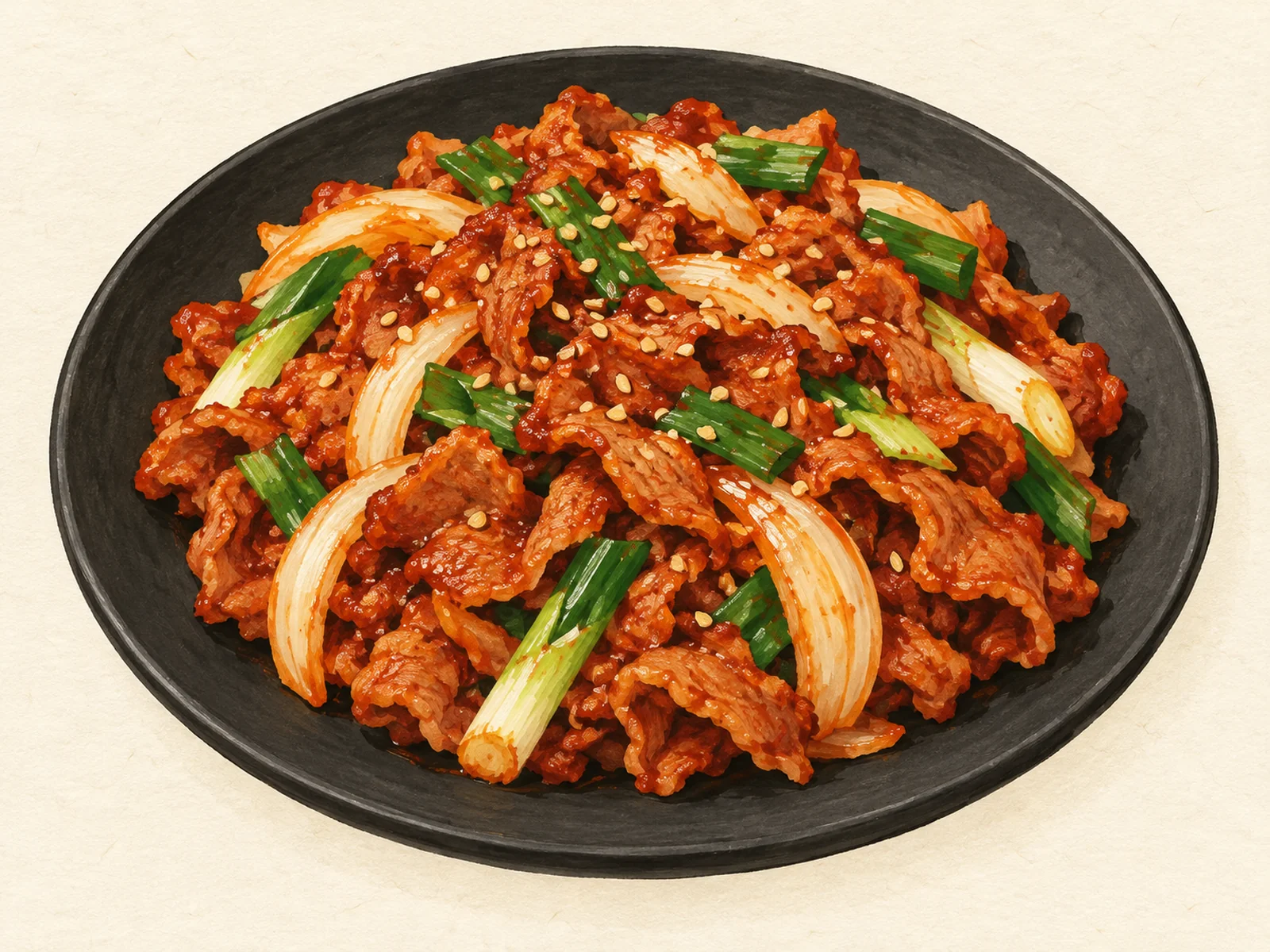
This jeyuk bokkeum serves two in about 30 minutes. Thinly sliced pork shoulder is stir-fried over medium-high heat, coated in a sweet and spicy sauce made with gochujang (Korean chili paste), and finished with onion, green onion and sesame. This version needs no marinating; the 30-minute estimate assumes pre-sliced pork and excludes cooking rice.
Published recipes differ on when to add the sauce and whether to marinate the pork. This entry follows the version that cooks the pork first, then adds the sauce and vegetables. Watching the heat keeps the sauce coating the pork without burning on the pan.
Jeyuk comes from jeoyuk, a word for pork. The 1934 edition of the cookbook Joseon yori jebeop records jeyuk bokkeum seasoned with soy sauce or saeujeot (Korean salted shrimp) brine, and the 1946 cookbook Joseon eumsik mandeuneun beop records a version stir-fried with gochujang mixed into soy sauce. The National Folk Museum of Korea’s encyclopedia suggests that a form close to today’s dish became established in the 1960s and 1970s.
Ingredients
Scroll sideways to see all columns →
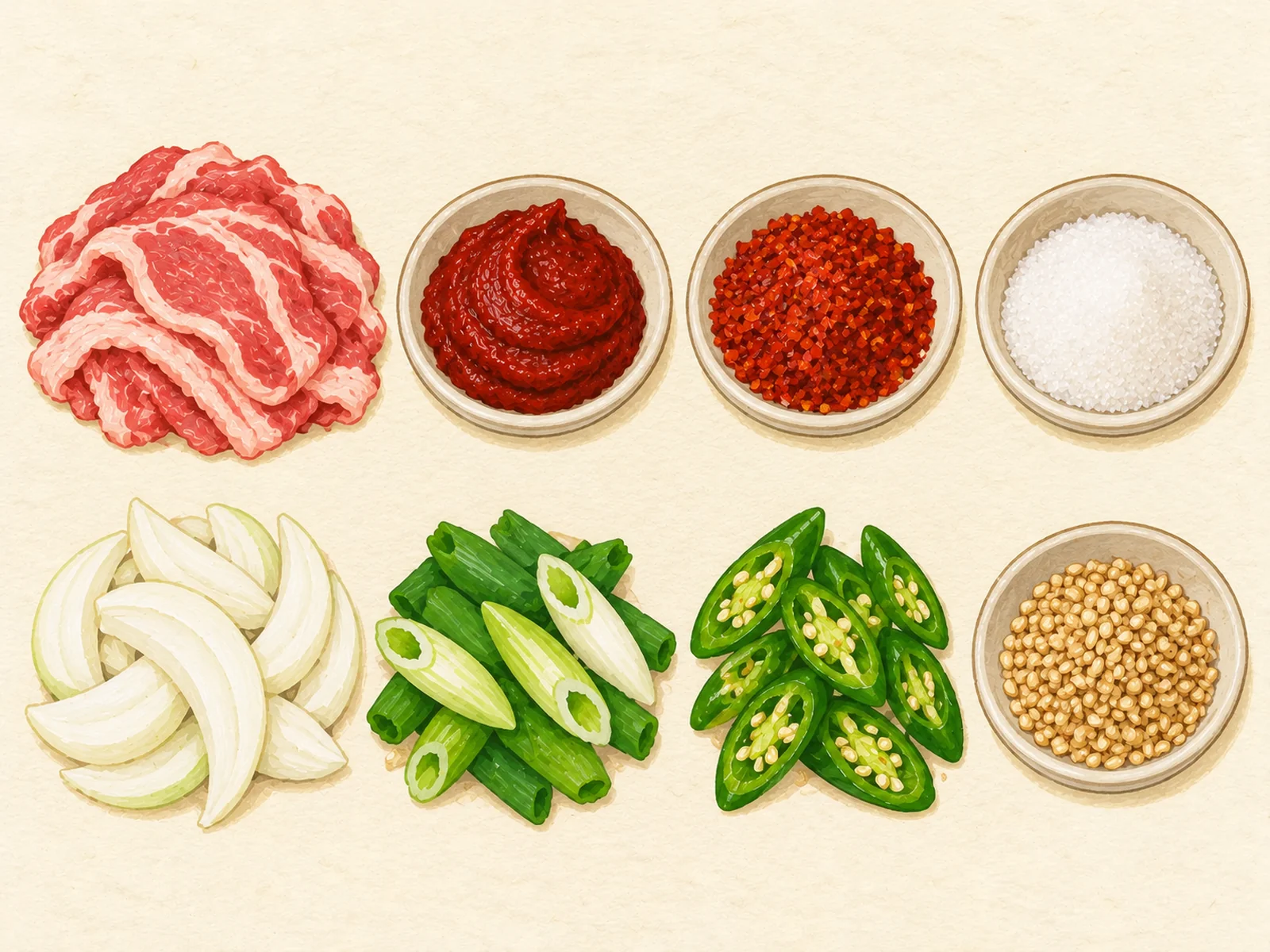
| # | Ingredients | Qty | Remarks |
|---|---|---|---|
| 01 | Cooking oil | 1 tbsp | Keep up to 2 tbsp (30 ml) water by the stove in case the sauce sticks |
| 02 | Pork shoulder, thinly sliced | 300 g (10.6 oz) | 2–3 mm (about 1/8 in) slices. Pre-sliced pork from a Korean grocery works. Alt: pork belly or neck |
| 03 | Gochujang (Korean chili paste) | 1 1/2 tbsp | |
| 04 | Gochugaru (Korean chili flakes) | 1 tbsp | |
| 05 | Soy sauce | 1 tbsp | Regular soy sauce, not soup soy sauce |
| 06 | Sugar | 1 tbsp | |
| 07 | Minced garlic | 1 tsp | |
| 08 | Cooking wine | 1 tbsp | Alt: omit |
| 09 | Onion | 1/2 ea (about 100 g / 3.5 oz) | 1 cm (about 3/8 in) slices |
| 10 | Green onion | 1 stalk | Diagonal slices |
| 11 | Cheongyang chili (Korean hot green chili) | 1 ea (optional) | Thin diagonal slices. Cheongyang chili appears in some specimens. Alt: any hot green chili |
| 12 | Sesame oil | 1 tsp | |
| 13 | Sesame seeds | A pinch |
Equipment
- Frying pan or wok, 26–28 cm (about 10 1/4–11 in)
- Small bowl, for the sauce
- Wooden spatula
Instructions
Mix the gochujang, gochugaru, soy sauce, sugar, garlic and cooking wine in the bowl.
Gochujang (Korean chili paste) 1 1/2 tbsp · Gochugaru (Korean chili flakes) 1 tbsp · Soy sauce 1 tbsp · Sugar 1 tbsp · Minced garlic 1 tsp · Cooking wine 1 tbsp
Cut the onion, green onion and optional chili as noted in the ingredients. Separate the pork slices.
Onion 1/2 ea (about 100 g / 3.5 oz) · Green onion 1 stalk · Cheongyang chili (Korean hot green chili) 1 ea (optional) · Pork shoulder, thinly sliced 300 g (10.6 oz)
Heat the oil in the pan over medium-high heat. Spread the pork in one layer.
Cooking oil 1 tbsp · Pork shoulder, thinly sliced 300 g (10.6 oz)
Stir-fry the pork for about 3–4 min until no pink remains on the surface.
Add the sauce. Stir-fry for about 2 min until the sauce coats the pork. Stir often. If the sauce sticks, lower the heat.
Add the onion. Stir-fry for about 2 min until the onion edges soften.
Onion 1/2 ea (about 100 g / 3.5 oz)
Add the green onion and the chili, if used. Stir-fry for about 30 sec. Check that the pork is fully cooked.
Green onion 1 stalk · Cheongyang chili (Korean hot green chili) 1 ea (optional)
Turn off the heat. Add the sesame oil and sesame seeds. Serve with rice. If you want wraps, serve leafy greens on the side.
Sesame oil 1 tsp · Sesame seeds A pinch
Doneness Check
- Pork is fully cooked, no pink. For certainty, a probe inserted sideways reads 75°C (167°F)
- Sauce coats the pork and no liquid pools in the pan
- Onion is soft at the edges but still holds its shape
- The pork has no black, burnt sauce.
Variations
- Soy sauce jeyuk bokkeum
- The seasoning uses soy sauce and sugar, without gochujang or gochugaru.
- Marinated jeyuk bokkeum
- The pork, seasoning and vegetables marinate in the refrigerator for 30–60 min before cooking.
Similar Dishes
- Bulgogi
- Beef bulgogi uses thin beef marinated in soy sauce and sugar, unlike this gochujang pork stir-fry, although some spicy pork dishes also use the bulgogi name.
FAQ
Which cut of pork works best?
This recipe uses pork shoulder sliced 2–3 mm (about 1/8 in) thick. Pork belly gives a richer result and pork neck works too. Korean grocery stores sell pork pre-sliced for this dish.
Can I marinate the pork ahead of time?
Yes, but keep it refrigerated, never at room temperature, and cook it within about a day without exceeding the pork's use-by date. Set aside any sauce for serving before it touches raw pork, or bring the used marinade to a full boil before serving it.
How do I make it milder or spicier?
Gochujang, gochugaru and green chili all add heat, which varies by product. For a milder dish, reduce the gochugaru and skip the chili. For more heat, add the chili.
Sources
- Maangchi — Spicy stir-fried pork (Dwaejigogi-bokkeum)
- Korean Bapsang — Dweji Bulgogi (Spicy Pork BBQ)
- Korean Bapsang — Bulgogi (Korean BBQ Beef)
- My Korean Kitchen — Spicy Pork Bulgogi
- Chef Chris Cho — Korean Spicy Pork (Jeyuk Bokkeum)
- Kim Jin-ok — Diner-style jeyuk bokkeum (Korean)
- Kim Jin-ok — Marinated jeyuk bokkeum (Korean)
- 10000recipe — Pork neck jeyuk bokkeum (Korean)
- 10000recipe — Soy sauce jeyuk bokkeum (Korean)
- Illinois Extension — Grilling and food safety (marinating)
- FoodSafety.gov — Cold food storage chart
- Health Canada — Refined oils and food allergens
- USDA — Leftovers and food safety
- MFDS — Cooking meat safely (Korean)
- USDA — Thermometer use for thin meat (PDF)
- The Kitchn — Preventing fumes when cooking chiles
- National Institute of Korean Language — Jeoyuk (in Korean)
- National Institute of Korean Language — Jeyuk (in Korean)
- Korea Traditional Knowledge Portal — Jeyuk bokkeum, 1934 (in Korean)
- Korea Traditional Knowledge Portal — Jeyuk bokkeum, 1946 (in Korean)
- National Folk Museum of Korea — Jeyuk bokkeum (in Korean)
Compiled and reviewed by Nuri · Published · Updated