 K-Dogam
No. 014 · Myeon
Japchae Recipe with Beef (Korean Glass Noodles)
잡채 · Japchae
Servings & Time
2 servings · Prep 25min · Cook 20min
About This Dish
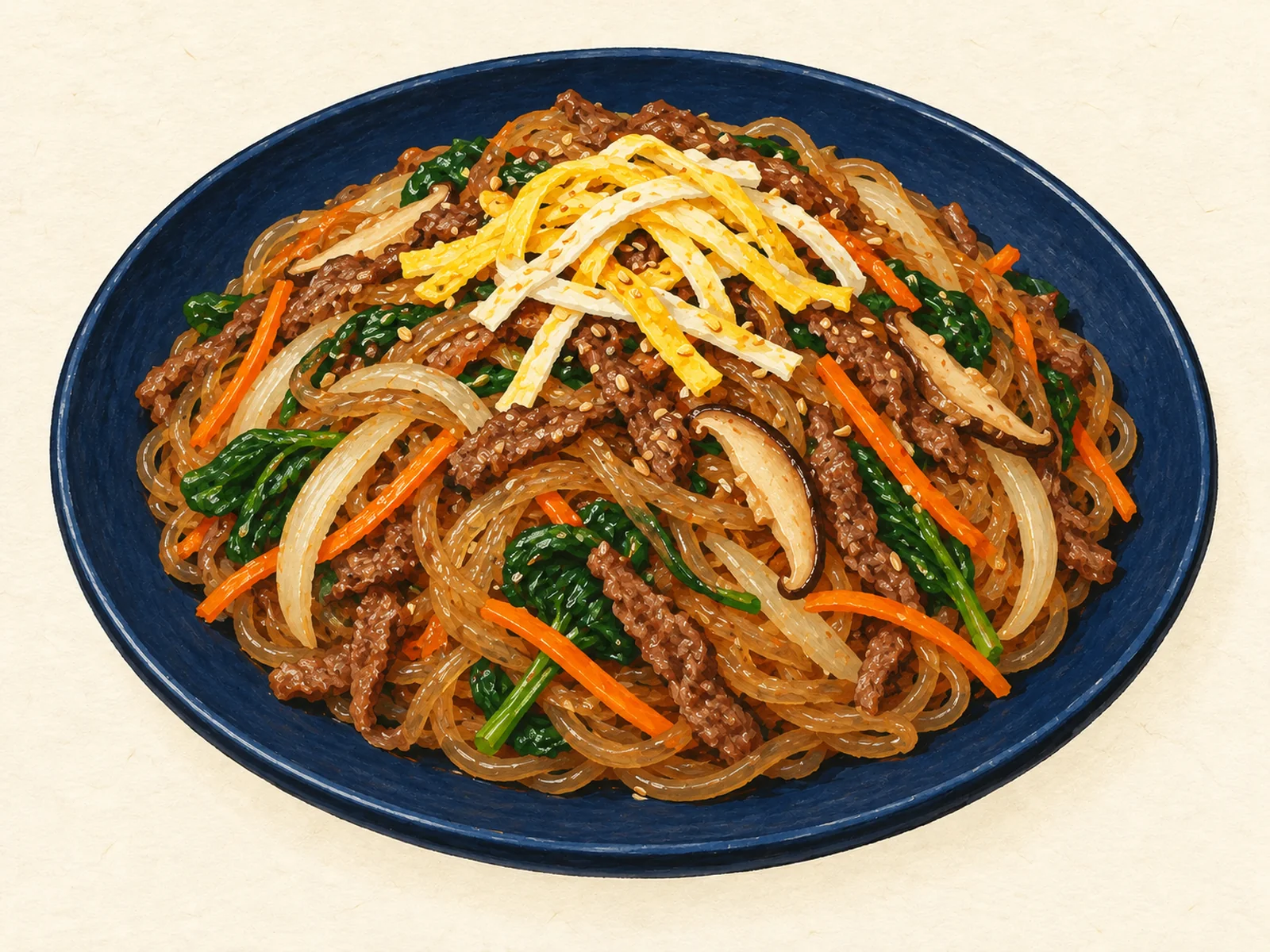
This japchae serves two in about 45 minutes. Dangmyeon (sweet potato starch noodles) are boiled, dressed with soy sauce, sugar and sesame oil, and tossed with stir-fried beef, onion, carrot and mushrooms, plus blanched spinach and egg strips. The key is to drain the rinsed noodles well and dress them promptly, so they do not stick together.
The National Folk Museum of Korea’s encyclopedia describes an early japchae in Eumsik dimibang, a cookbook from around 1670, made without noodles from vegetables, mushrooms and pheasant. According to the same encyclopedia, recipes with dangmyeon appear from the 1930s. Today it is a common dish for birthdays and feasts.
The onion and carrot are stir-fried separately, so each keeps its color and texture. The noodles are tossed in a bowl instead of stir-fried in the pan.
Ingredients
Scroll sideways to see all columns →
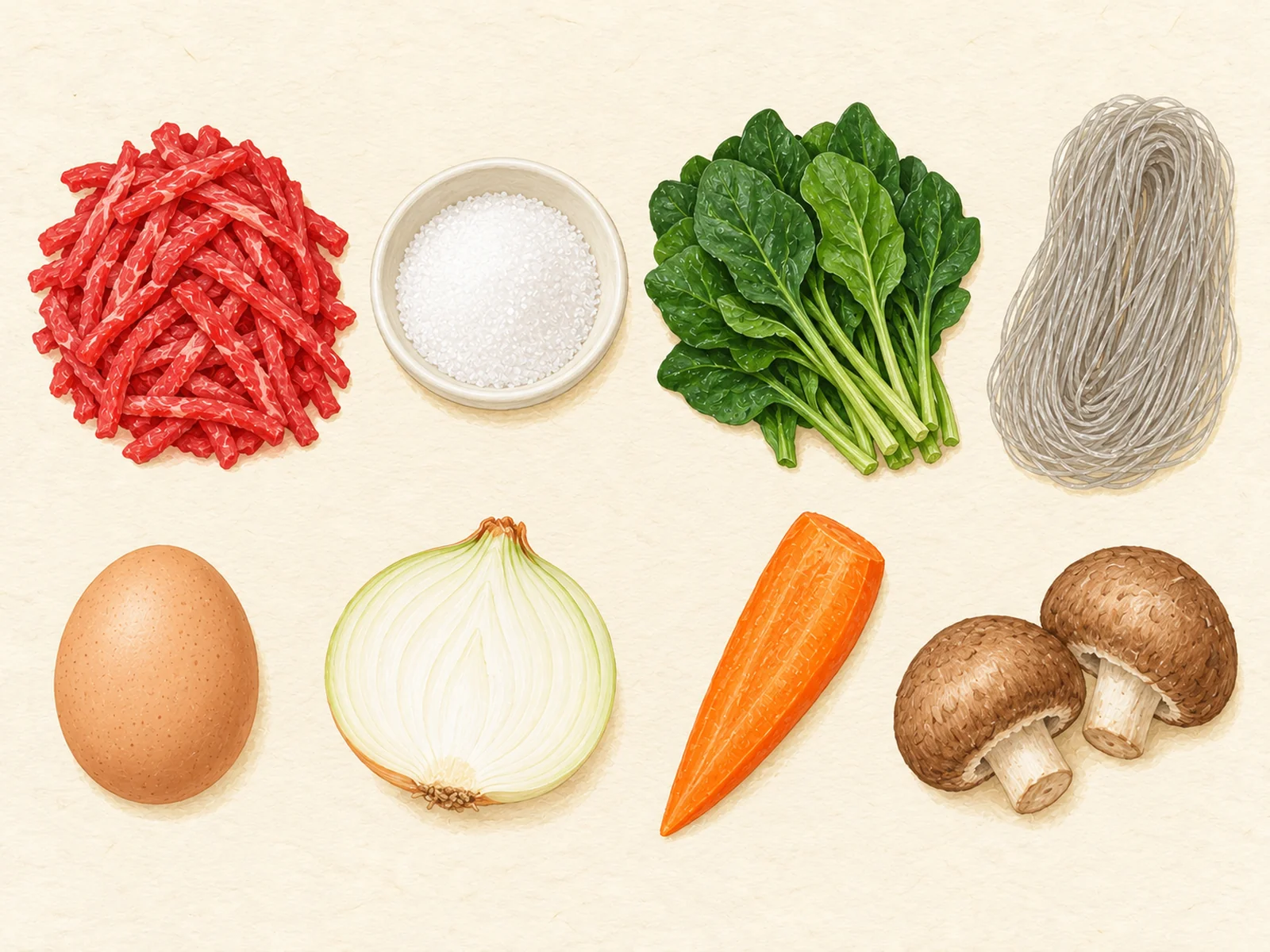
| # | Ingredients | Qty | Remarks |
|---|---|---|---|
| 01 | Beef, cut into thin strips | About 80 g (2.8 oz) | |
| 02 | Soy sauce | About 2 1/2 tbsp | Divided. Regular cooking soy sauce, not soup soy sauce |
| 03 | Sugar | About 1 tbsp + 1/2 tsp | Divided |
| 04 | Minced garlic | About 1 tsp | Divided |
| 05 | Sesame oil | About 1 tbsp + 1 tsp | Divided |
| 06 | Black pepper | 2 pinches | Divided |
| 07 | Spinach | About 100 g (3.5 oz) | |
| 08 | Salt | 2 pinches | Divided |
| 09 | Dangmyeon (dried sweet potato starch noodles) | About 100 g (3.5 oz) | Check the package for cooking time and ingredients |
| 10 | Egg | 1 ea | |
| 11 | Cooking oil | About 4 tsp | Divided |
| 12 | Onion | 1/2 ea | Thinly sliced |
| 13 | Carrot | 1/4 ea | Thin matchsticks |
| 14 | Fresh pyogo mushrooms (Korean forest mushrooms) | 2 ea | Thinly sliced |
| 15 | Toasted sesame seeds | 1 tsp |
Equipment
- Pot, for boiling water
- Frying pan, 24–26 cm (about 9 1/2–10 1/4 in)
- Large mixing bowl
- Kitchen scissors
Instructions
Mix the beef with the soy sauce, sugar, garlic, sesame oil and pepper. Refrigerate it for about 10 minutes.
Beef, cut into thin strips About 80 g (2.8 oz) · Soy sauce 1/2 tbsp · Sugar 1/2 tsp · Minced garlic 1/2 tsp · Sesame oil 1/2 tsp · Black pepper A pinch
Bring a pot of water to a boil. Blanch the spinach for about 30 seconds. Rinse the spinach in cold water. Squeeze out the water.
Spinach About 100 g (3.5 oz)
Mix the spinach with a pinch of salt and the sesame oil.
Salt A pinch · Sesame oil 1/2 tsp
Boil the noodles in the same water for about 6 minutes, until clear and soft. Rinse them briefly in cold water. Drain them well.
Dangmyeon (dried sweet potato starch noodles) About 100 g (3.5 oz)
Cut the noodles a few times with scissors. In the large bowl, mix them with the soy sauce, sugar, sesame oil, garlic and pepper.
Soy sauce 2 tbsp · Sugar 1 tbsp · Sesame oil 1 tbsp · Minced garlic 1/2 tsp · Black pepper A pinch
Beat the egg with a pinch of salt. Spread it in a thin layer in an oiled pan. Cook it over low heat until fully set. Cut it into thin strips.
Egg 1 ea · Cooking oil 1 tsp · Salt A pinch
Heat oil over medium heat. Stir-fry the onion for about 2 minutes, until it turns translucent. Add it to the bowl.
Onion 1/2 ea · Cooking oil 1 tsp
Add oil to the pan. Stir-fry the carrot for about 1 minute, until slightly soft. Add it to the bowl.
Carrot 1/4 ea · Cooking oil 1 tsp
Add oil to the pan. Stir-fry the beef and mushrooms for about 3 minutes, until the beef is fully cooked. Add them to the bowl.
Fresh pyogo mushrooms (Korean forest mushrooms) 2 ea · Cooking oil 1 tsp
Add the spinach. Mix everything with tongs or gloved hands. Taste the japchae. Adjust the seasoning if necessary. Top with the egg strips and sesame seeds.
Toasted sesame seeds 1 tsp
Doneness Check
- The noodles are clear and soft, with no white core
- The beef is fully cooked, with no pink juices
- The noodles are evenly coated, with no dry or clumped parts
Variations
- Japchae-bap (japchae over rice)
- One recipe stir-fries leftover japchae with extra seasonings such as gochugaru (Korean chili flakes) and serves it over rice with a fried egg.
- Gochu-japchae (pepper japchae)
- It carries the japchae name, but in the recipe checked for this entry no noodles appear; pork and bell peppers fill their place.
- Jinju-style japchae
- Jinju-style japchae is a regional form without noodles, made with bracken, soybean sprouts, bamboo shoots and lotus root dressed with soy sauce and mustard.
FAQ
Do I need to soak the noodles first?
Not for this entry. The noodles go straight into boiling water for about 6 minutes. Some recipes soak them first, so follow your package instructions.
Can I make japchae without beef?
Yes. Leave out the beef and add more mushrooms or pan-fried tofu.
Can I make japchae ahead and reheat it?
Refrigerate it in shallow containers within 2 hours after cooking (1 hour if the room is 32°C (90°F) or hotter), keep it at 4°C (40°F) or below, and use it within 3–4 days. The noodles can firm up in the refrigerator as their starch changes. Reheat in a pan with a little water until all parts reach 74°C (165°F).
Which noodles should I buy?
Look for dangmyeon or Korean sweet potato starch noodles. Packages labeled only glass noodles may be made from a different starch, so check the ingredient list.
Sources
- My Korean Kitchen — Japchae
- Korean Bapsang — Japchae
- Maangchi — Japchae
- RecipeTin Eats — Japchae
- Hot Thai Kitchen — Glass noodle stir-fry
- Wtable — Japchae (Korean)
- 10000recipe — Japchae and japchae-bap (Korean)
- Wtable — Gochu-japchae (Korean)
- National Folk Museum of Korea — Japchae (Korean)
- Sempio — Glass noodles ingredients
- Hu et al. — Retrogradation of sweet potato starch noodles (2022)
- Centre for Food Safety, Hong Kong — Bacillus cereus in starchy food
- FDA — Egg safety
- MFDS — Cooking meat safely (Korean)
- Illinois Extension — Grilling and summer food safety
- USDA — Leftovers and food safety
- FoodSafety.gov — Cold food storage chart
Compiled and reviewed by Nuri · Published