 K-Dogam
No. 020 · Jjim Banchan
Ttukbaegi Gyeran-jjim Recipe (Korean Steamed Eggs)
계란찜 · Gyeran-jjim
Servings & Time
2 servings · Prep 5min · Cook 10min
About This Dish
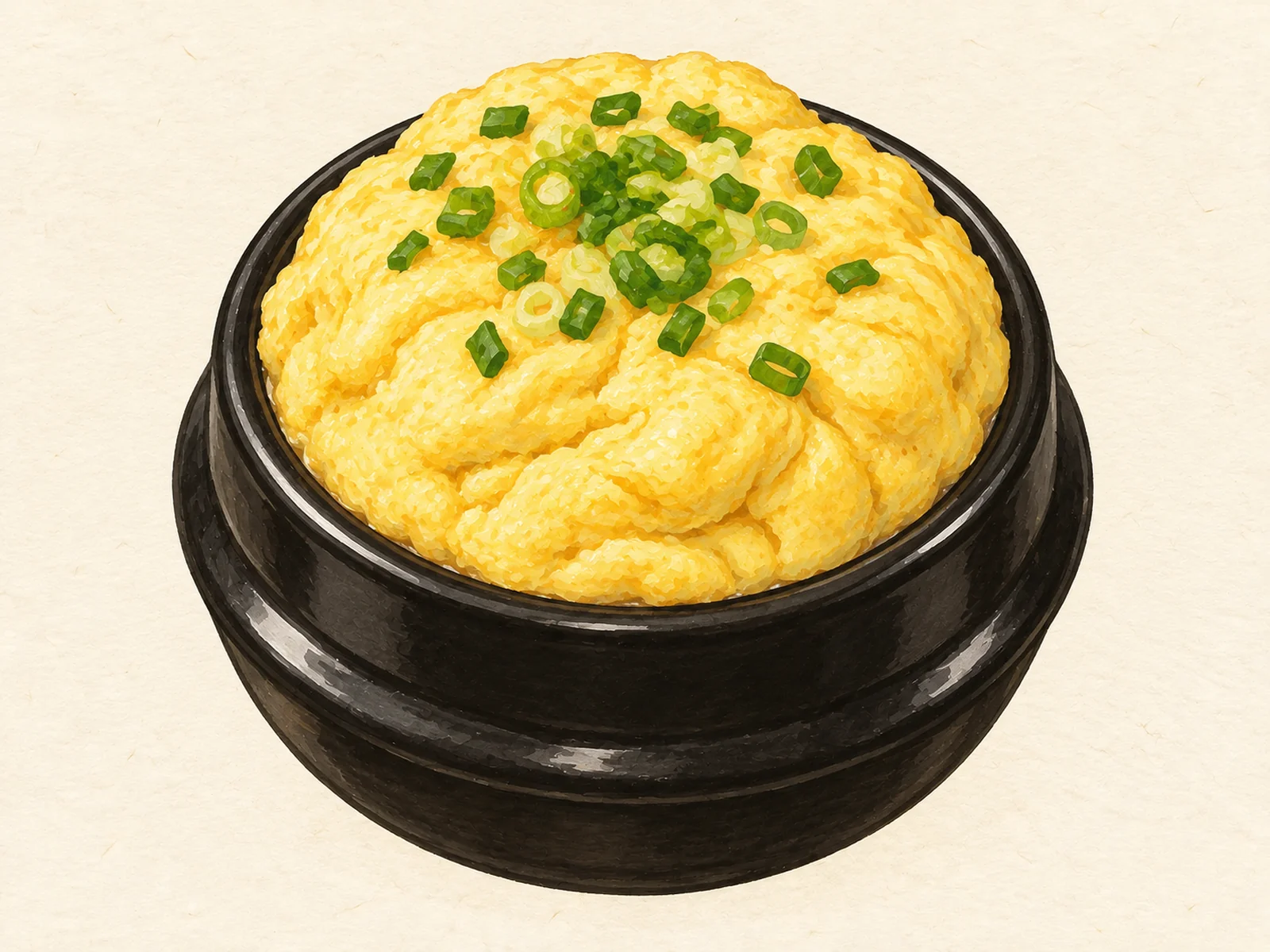
This gyeran-jjim serves two and takes about 15 minutes. Beaten eggs are poured into simmering water seasoned with saeujeot (Korean salted shrimp) in a small ttukbaegi (Korean earthenware pot), stirred into soft curds, then covered so the eggs puff up above the rim. The key is to stir until curds form, then lower the heat before you cover the pot.
Gyeran-jjim is a banchan, a side dish served with rice. One Korean recipe suggests it alongside spicy dishes. Other versions are steamed smooth in a water bath or cooked in the microwave, as listed below.
Jubangmun, a cookbook whose copying date is estimated as the late 17th or early 18th century, describes al-jjim: eggs mixed with seasoned water, black pepper and cheoncho (Korean prickly ash), then steamed in a bowl on top of cooking rice. Citing the 1943 edition of the cookbook Joseon mussang sinsik yori jebeop, the Encyclopedia of Korean Culture describes its gyeran-tang (an egg dish) as the same method as present-day al-jjim. These records do not show when gyeran-jjim began, or when today’s puffed version in a ttukbaegi appeared.
For another dish served with rice, see miyeokguk (seaweed soup).
Ingredients
Scroll sideways to see all columns →
| # | Ingredients | Qty | Remarks |
|---|---|---|---|
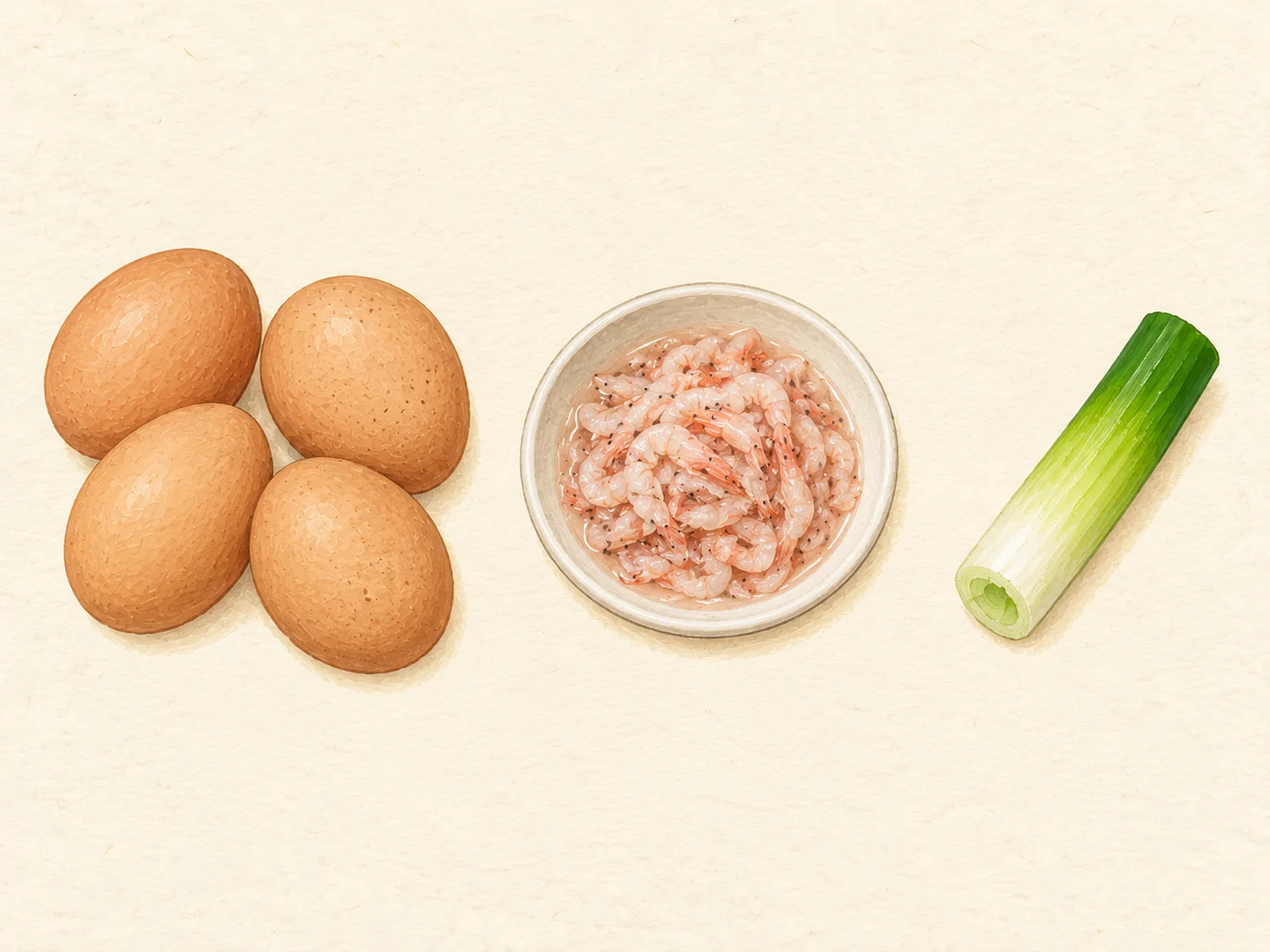
| 01 | Eggs | 4 ea | |
| 02 | Water | About 250 ml (about 1 cup) | |
| 03 | Saeujeot (Korean salted shrimp) | About 1/2 tbsp | Finely chopped. Without it, use about 1/2 tsp of salt |
| 04 | Green onion | About 1/4 stalk | Thinly sliced |
| 05 | Sesame oil | About 1/2 tsp |
Equipment
- Small ttukbaegi (Korean earthenware pot), about 700 ml (3 cups), with a lid that leaves room for the eggs to rise, or a small heavy-bottomed saucepan
- Bowl
- Spoon
Instructions
Beat the eggs in the bowl.
Eggs 4 ea
Put the water and saeujeot in the pot. Bring it to a boil over medium heat.
Water About 250 ml (about 1 cup) · Saeujeot (Korean salted shrimp) About 1/2 tbsp
Pour in the eggs. Stir along the bottom for about 1–2 minutes, until soft curds form.
Lower the heat. Sprinkle the green onion on top. Cover the pot. Cook over low heat for about 3 minutes, until the eggs puff up and the center is set.
Green onion About 1/4 stalk
Check that no liquid egg remains in the center. Drizzle the sesame oil on top.
Sesame oil About 1/2 tsp
Doneness Check
- The eggs are puffed and the center is set, with no liquid egg (optional check: the center reaches at least 71°C (160°F)); a slight wobble can remain
- The bottom of the pot is not burned
- The texture is soft and moist
Variations
- Smooth steamed gyeran-jjim (water bath version)
- With its mixture strained and its bowl covered with plastic wrap, it is recorded keeping a smooth surface instead of a puffed top.
- Microwave gyeran-jjim
- In the recipe checked for this entry, boiled broth partly sets the eggs first, then the covered bowl goes into the microwave.
- Myeongnan gyeran-jjim (pollock roe version)
- In the recipe checked for this entry, myeongnan (salted pollock roe) serves as both filling and seasoning, so no salt or saeujeot is added.
Similar Dishes
- Chawanmushi (Japanese steamed egg custard)
- The comparison source steams a mixture with a higher share of liquid in individual cups, while this gyeran-jjim puffs up over direct heat in one pot.
FAQ
Can I make it without a ttukbaegi?
Yes. One recipe uses a small saucepan with a thick bottom. Cover it with a heatproof lid that leaves room for the eggs to rise.
How do I know it is done?
The center is set and no liquid egg runs out when you push a spoon into it. A slight wobble can remain. For certainty, check that the center reaches at least 71°C (160°F).
Why does it stick to the bottom?
The heat may be too high after you cover the pot. Stir along the bottom until curds form, then lower the heat before you cover it.
What can I use instead of saeujeot?
Use about 1/2 tsp of salt instead; one recipe seasons 4 eggs this way. Fish sauce also works, but not in the same amount. Taste the broth before you add the eggs.
Sources
- Korean Bapsang — Gyeranjjim
- Maangchi — Ttukbaegi gyeranjjim
- Maangchi — Salted shrimp
- My Korean Kitchen — Korean steamed egg
- Serious Eats — Chawan mushi
- Wtable — Steamed eggs (Korean)
- Wtable — Smooth steamed eggs (Korean)
- 10000recipe — Myeongnan steamed eggs (Korean)
- Baekkot — Microwave steamed eggs (Korean)
- FDA — Egg safety
- American Egg Board — Doneness indicators
- USDA — Leftovers and food safety
- FoodSafety.gov — Cold food storage chart
- Korea Law Information Center — Food labeling rule, annex 2 (Korean)
- Health Canada — Refined oils and allergens
- Kim Gwi-yeong and Lee Seong-u — Analysis of cooking in Jubangmun, 1986 (in Korean)
- Encyclopedia of Korean Culture — Gyeran-tang (in Korean)
- Encyclopedia of Korean Culture — Jubangmun (in Korean)
- Baek Du-hyeon — Copying date of Jubangmun, from sound changes (in Korean)
Compiled and reviewed by Nuri · Published · Updated